Concept Exploration
UX Strategy & AI Interaction
2023
A
I-
S
T
Y
L
I
S
T
Background
Rethinking Human–AI Interaction.
Context
Problem
Goal
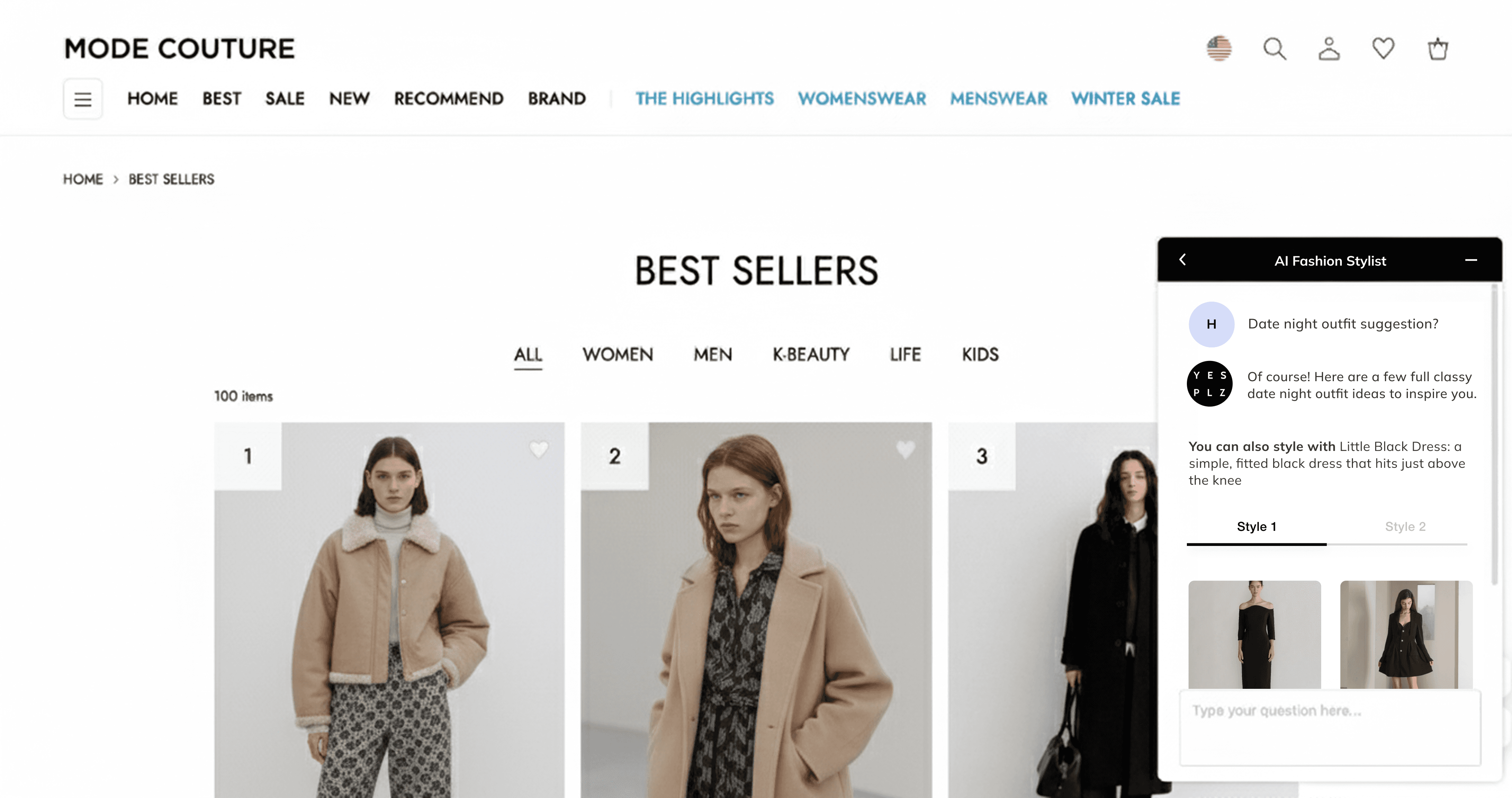
The AI Stylist is a chat-based tool providing personalized outfit recommendations from a store’s inventory.
Our user
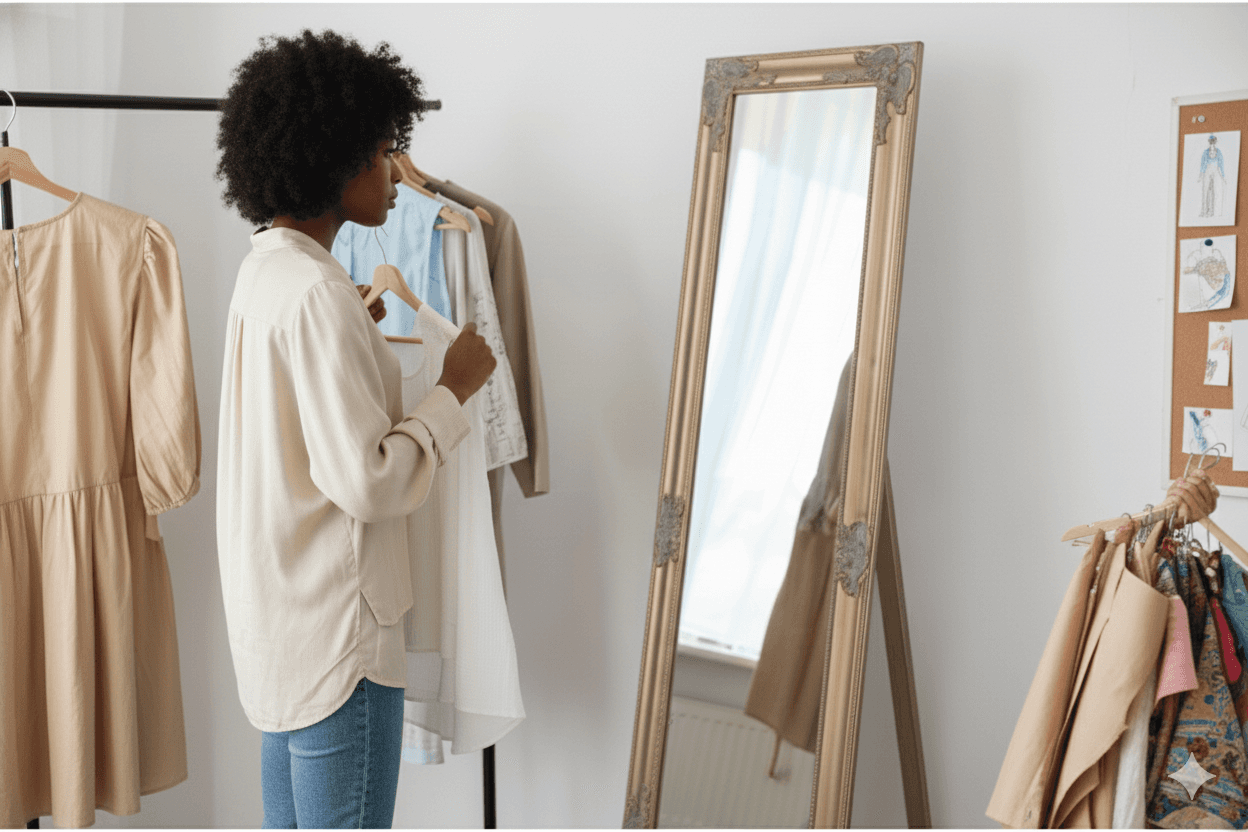
The Explorer (The Identity Seeker)
Who they are
Someone who feels lost when shopping and needs help finding clothes that match their personality.
Their real need
Driven by social aspiration. Their real need is expressing their true self to others.
Pain points
"I don't know what looks good on me," "I have nothing to wear to this event," "I feel overwhelmed by choice."
Big idea
Identity is shaped through interaction.
Relational identity

What if the AI Stylist could play that role?
Interactive partner

In social science, relational identity suggests that identity is not formed in isolation but develops fluidly through interaction with others. (Cross & Madson, 1997).
Style works the same way—it isn’t fixed, but shaped through feedback, adjustment, and iteration.
This led to a question: what if the AI Stylist could act as that “other,” helping users explore their style rather than simply providing answers?
Research
Research method
I conducted quick moderated think-aloud usability tests with MIT students representing our primary user group, with sessions lasting 20–30 minutes each.
Research questions
How easy is it to start a style search?
Do recommendations feel trustworthy?
Do multiple suggestions feel helpful?
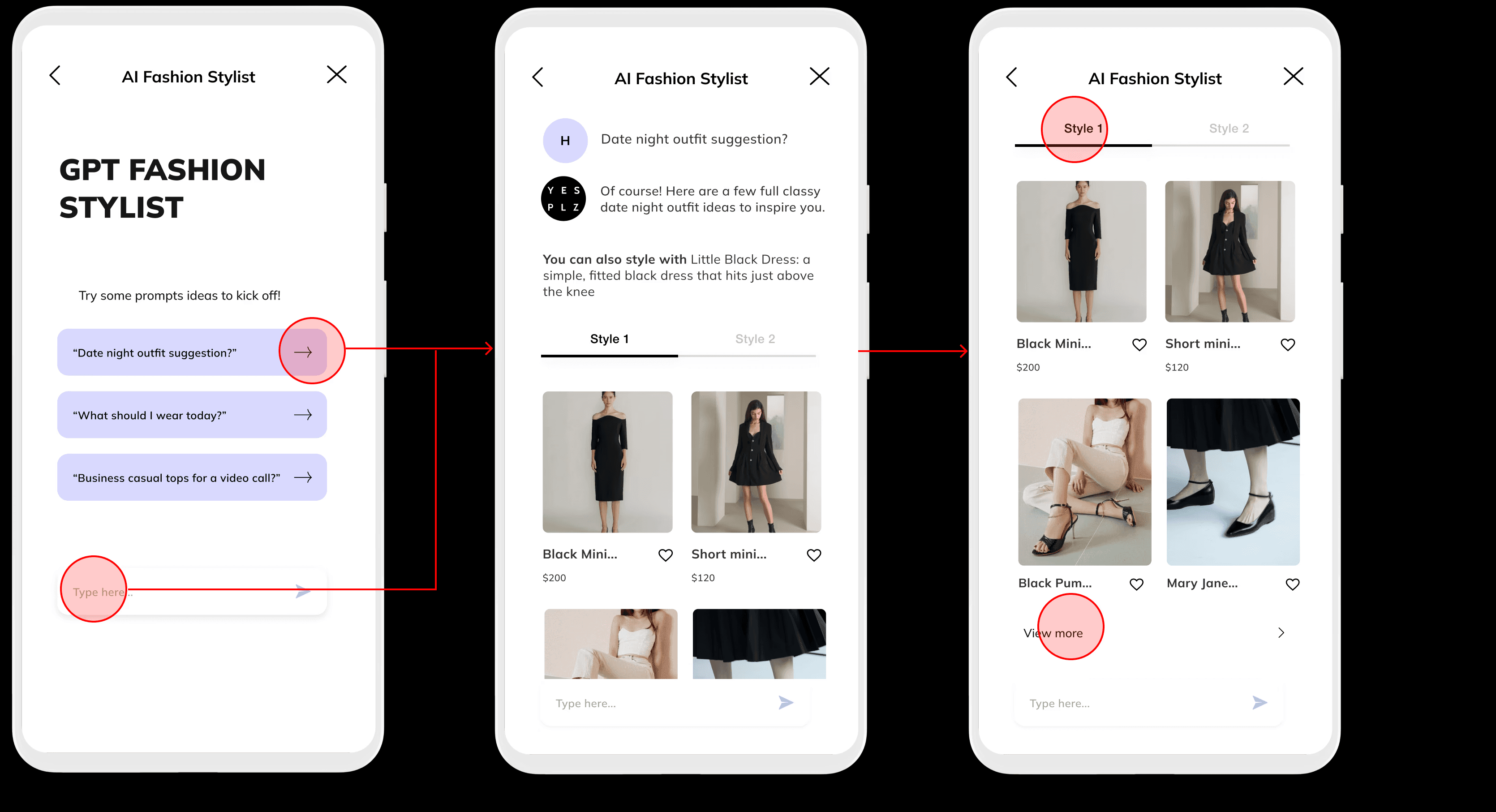
Existing user flow:
Research insight
84% used suggested prompts, but only 33% found them useful.
Users didn't find 'Show More' results useful.
Only 1 in 3 understood what the 'Style' tabs even meant.
Onboarding
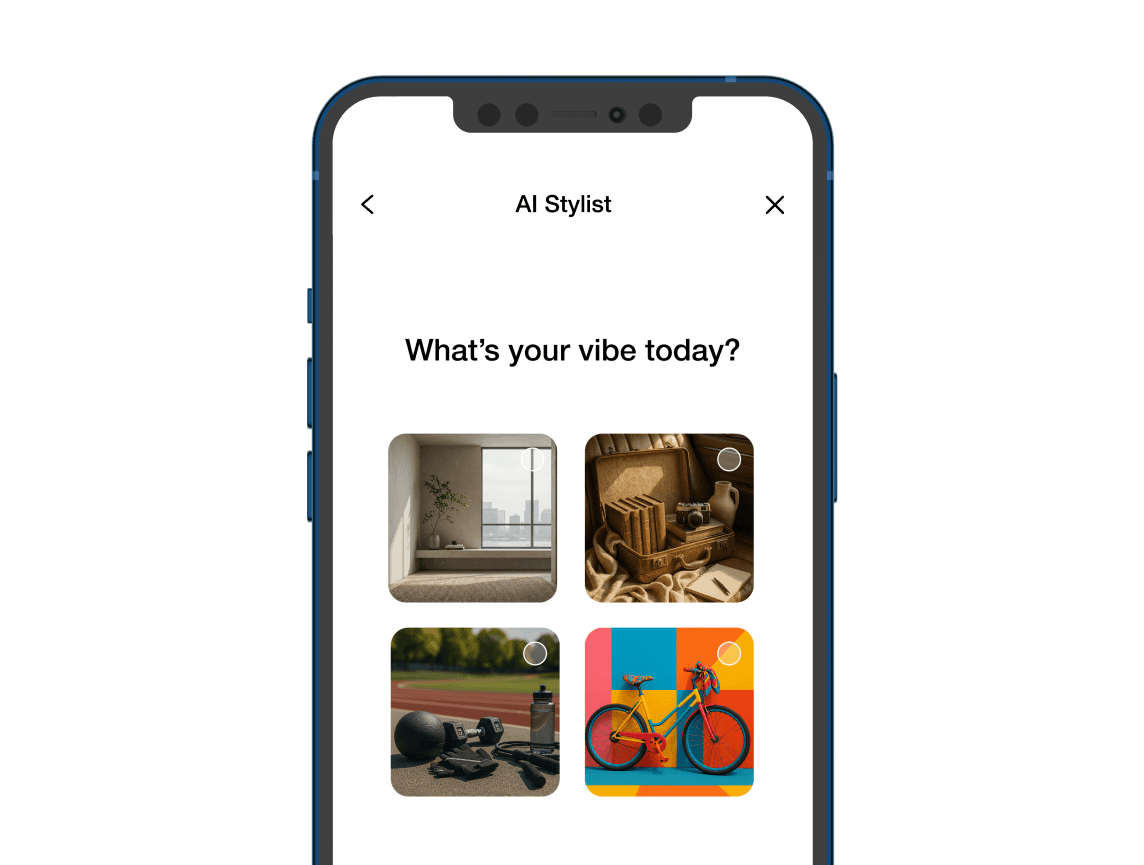
Expressing style visually.
Problem with the suggested prompt
❌ Felt like generic search keywords
❌ Difficulty describe styles in words
Visual check card: What vibe are you feeling?
✅ Break the search bar habit
✅ Express identity visually
✅ Gather emotional data

Feedback loop
Collaborative & Reactive feedback.
'Show more' & 'Style tabs'
❌ Didn’t feel in control of the results.
❌ Exploration felt flat
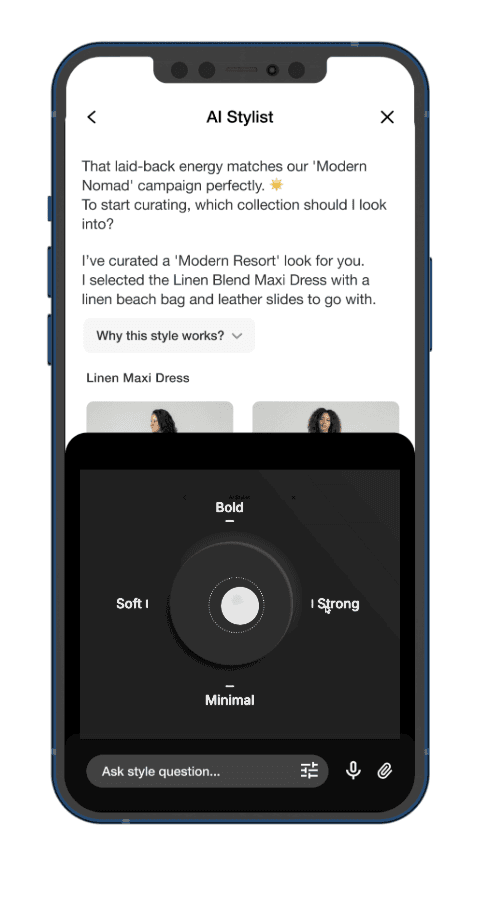
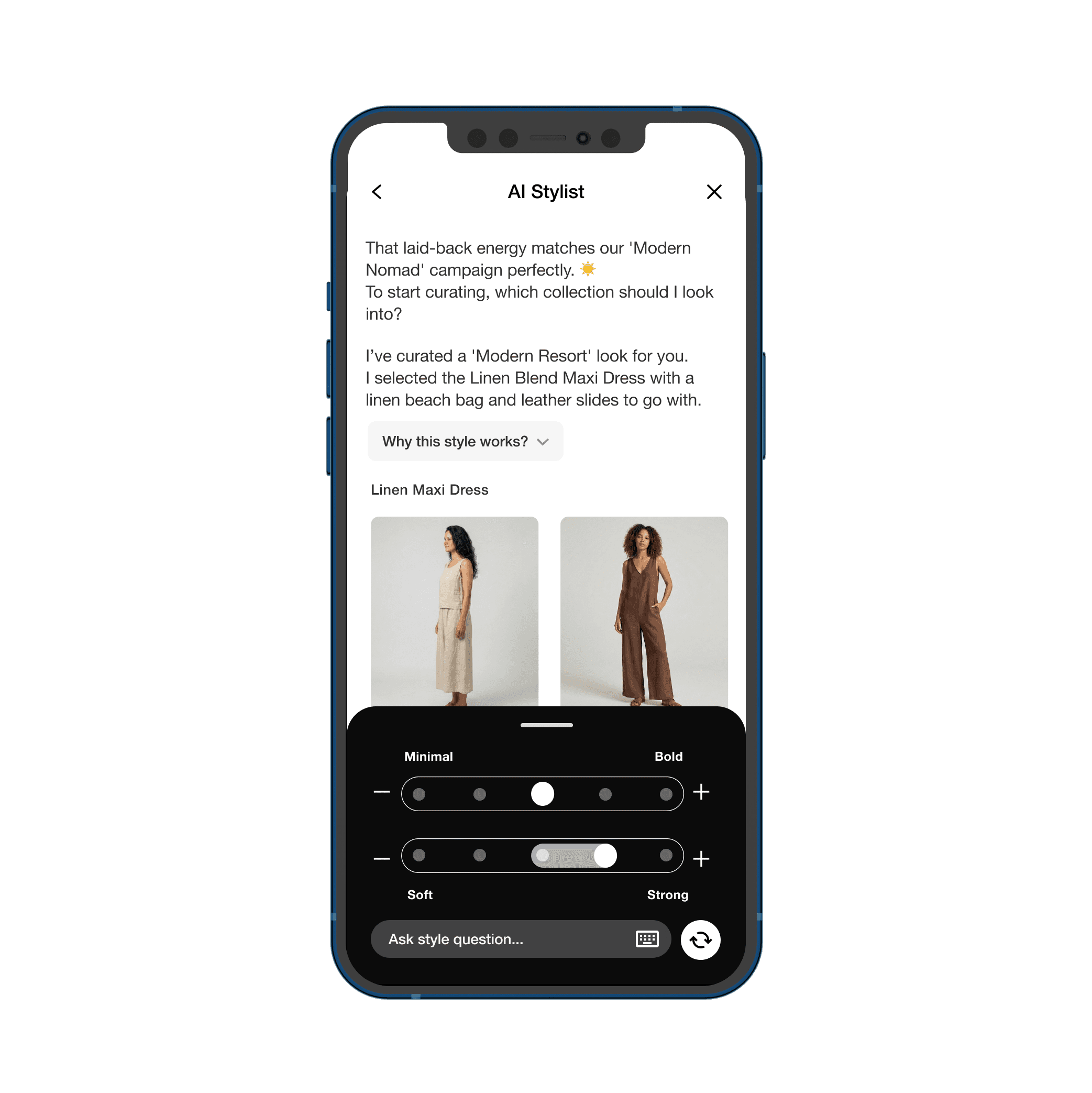
Style mixer for your outfit:
✅ Users feel they have playful control
✅ Users feel they are understood
✅ Real-time visual feedback

Feedback loop v2
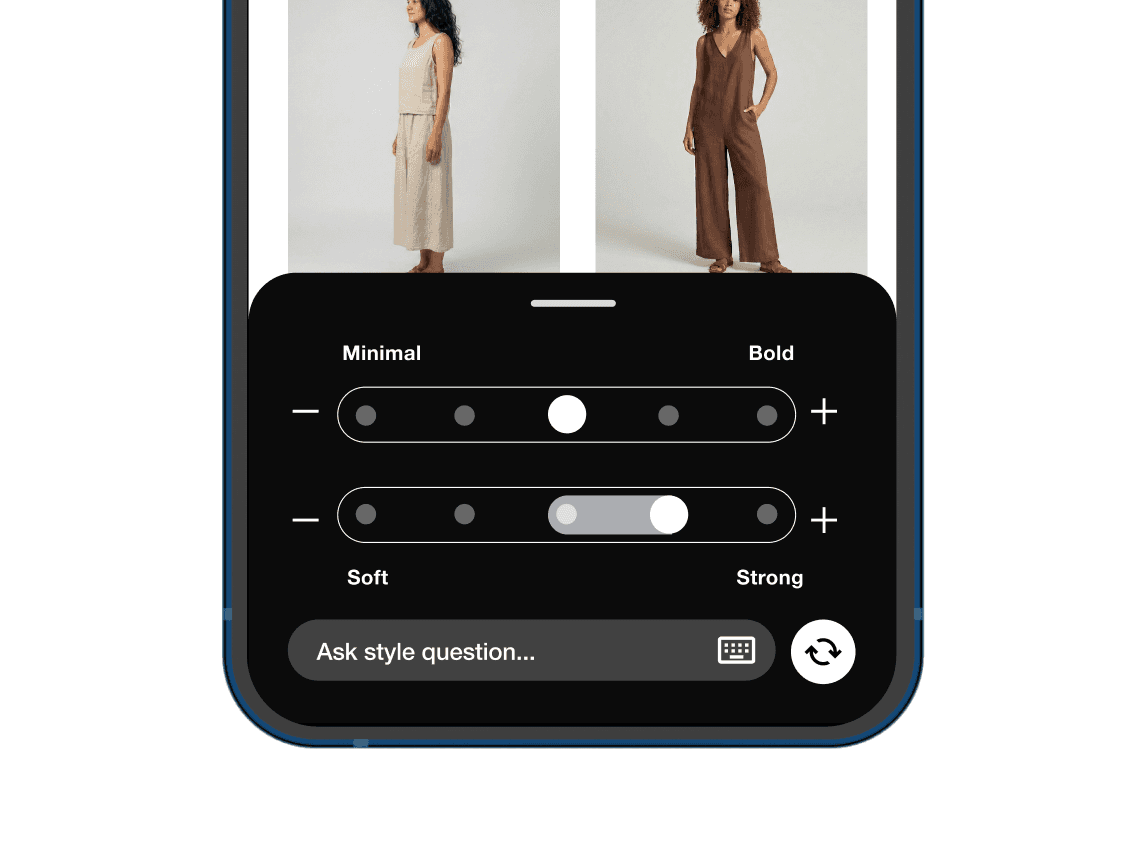
Improving Visibility & Control
Original Style mixer:
❌ Obscured curated style suggestions, limiting visibility.
Horizontal slider.
✅ Improving visibility
✅ Keeping interactive control.
Tooling
Rive
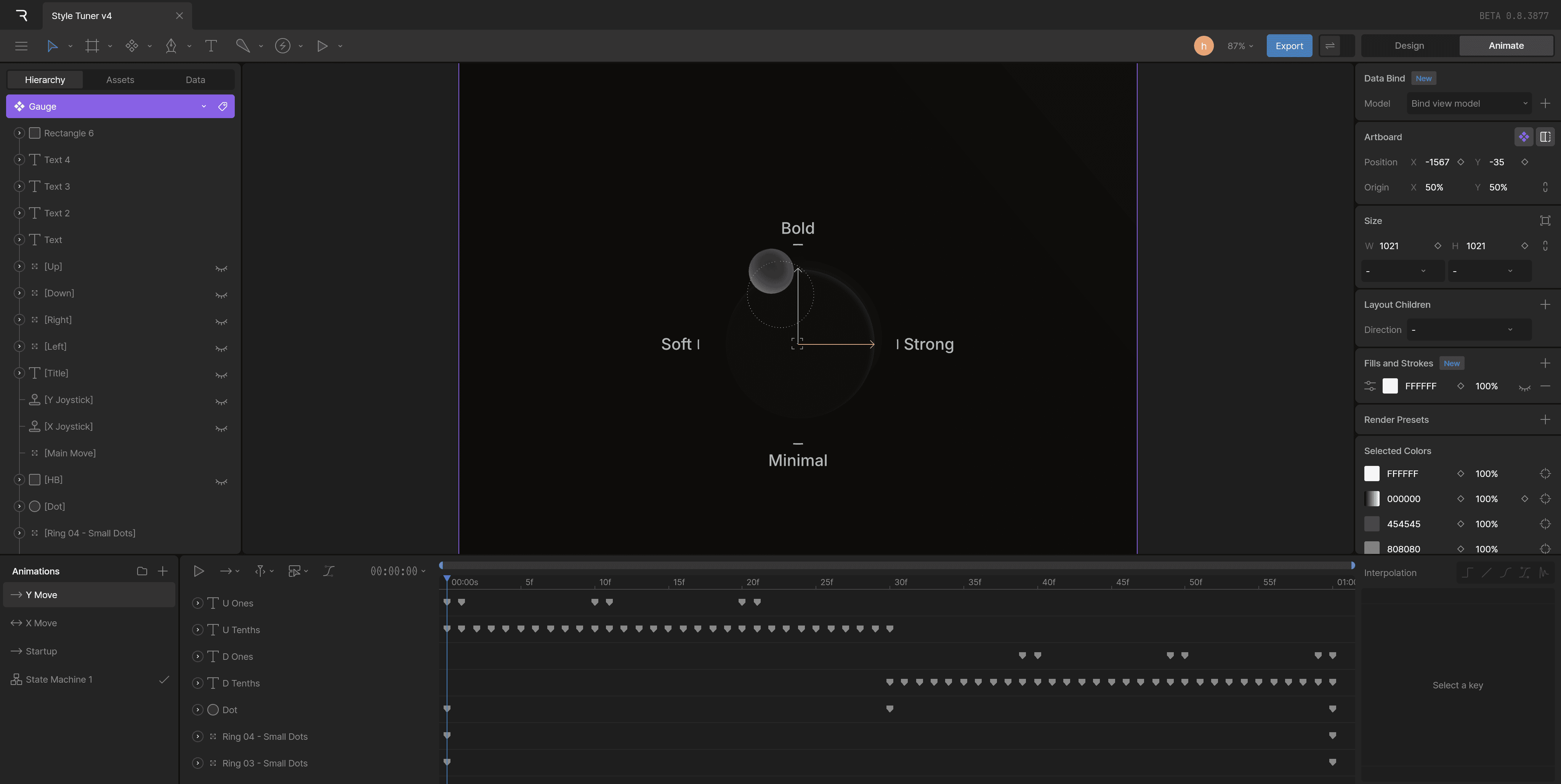
For this prototype, I used Rive, a 2D interactive animation tool that enables real-time interactions.
Why this tool?
I chose Rive for its state machine capabilities, lightweight web-based performance, and easy export for embedding in web and app experiences.
Challenge
Shifting mind set of a text-based interface.
During research, I found most users treated the AI Stylist like a search bar—type something in, get an answer.
Signaling the shift.
To indicate a new type of experience and guide users, I implemented the Style Tuner and visual mood boards—helping users express style visually while providing control, trust, and playful interaction.
Outcome
From feedback to direction.
The project received positive feedback from leadership, influenced AI Stylist’s shift from item recommendation to supporting users’ social aspirations, and explored how AI can empower users to understand themselves beyond just answering questions.
Positive leadership
Feedback
Explored a new product
Direction
Empowering users with